

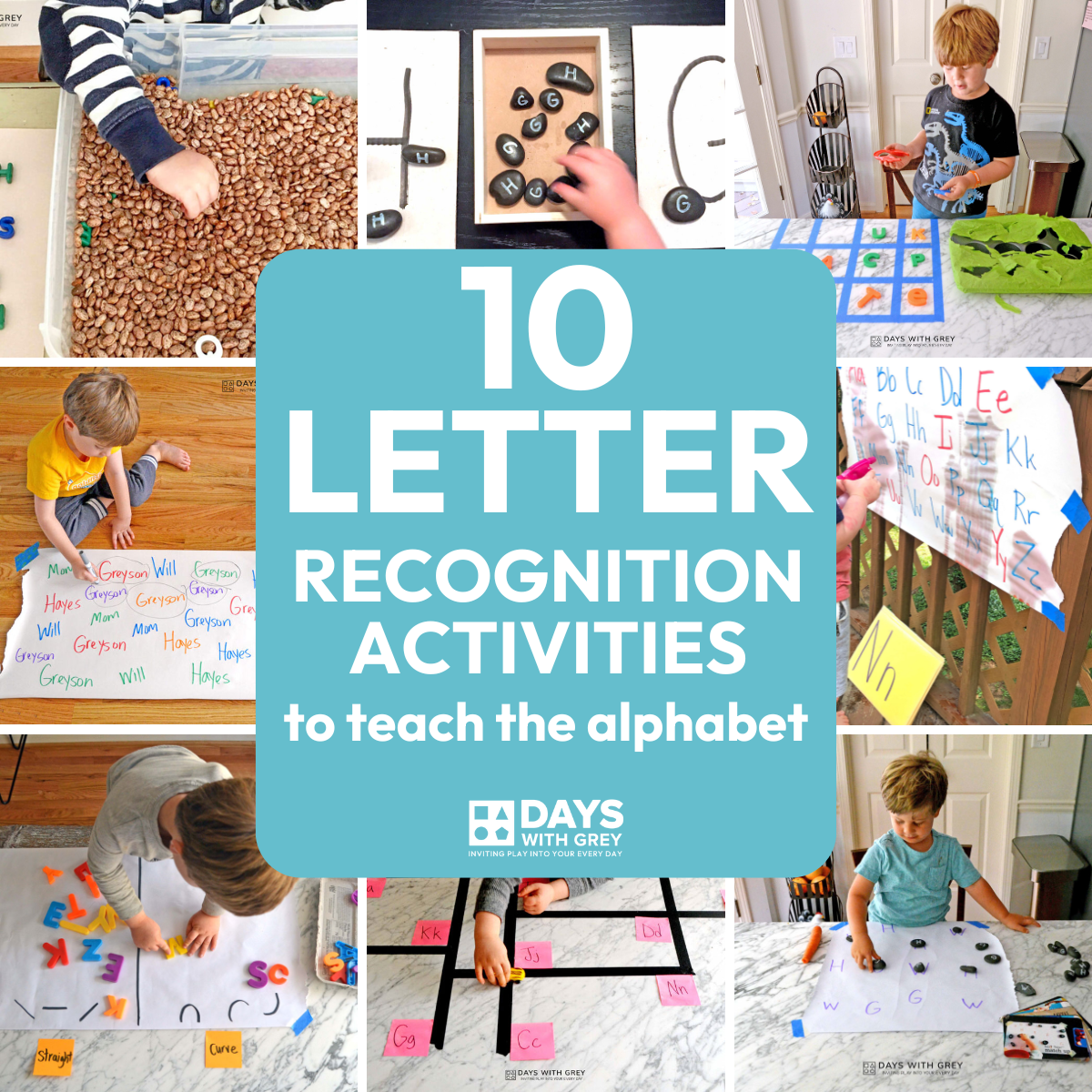
Wondering how to teach letter recognition at home? You’re not alone; it’s one of the most common questions parents ask. Letter recognition is a key part of early literacy skills, and the good news is you don’t need fancy programs to get started. (Spoiler: You also don’t need to go in alphabetical order! Gasp!) In this post, you’ll find 10 fun and easy alphabet activities for toddlers and preschoolers (written by a former Kindergarten teacher) that utilize hands-on play to build a strong reading foundation.
RELATED: Here are five ways to incorporate reading readiness into your daily routine with toddlers, preschoolers, and big kids.
What Is Letter Recognition?
Letter recognition is the ability to identify letter names, recognize what a letter looks like, remember how a letter sounds, and how notes come together to make blended sounds.
SUMMARIZE & SAVE THIS CONTENT ON
The alphabet does not need to be taught in a specific letter order; however, many believe teaching should begin with the most common letters. For example, T, L, and M will be taught before X and Q. I like to start with the individual letters in my child’s name.
Play these letter recognition activities with your child or in small groups! The most effective way for children to learn is through repetition and movement.
10 Letter Recognition Activities
Here are 10 different ways to introduce and practice letters. If you prefer not to scan the web or Pinterest, grab my activity cards so you have everything you need in one place.
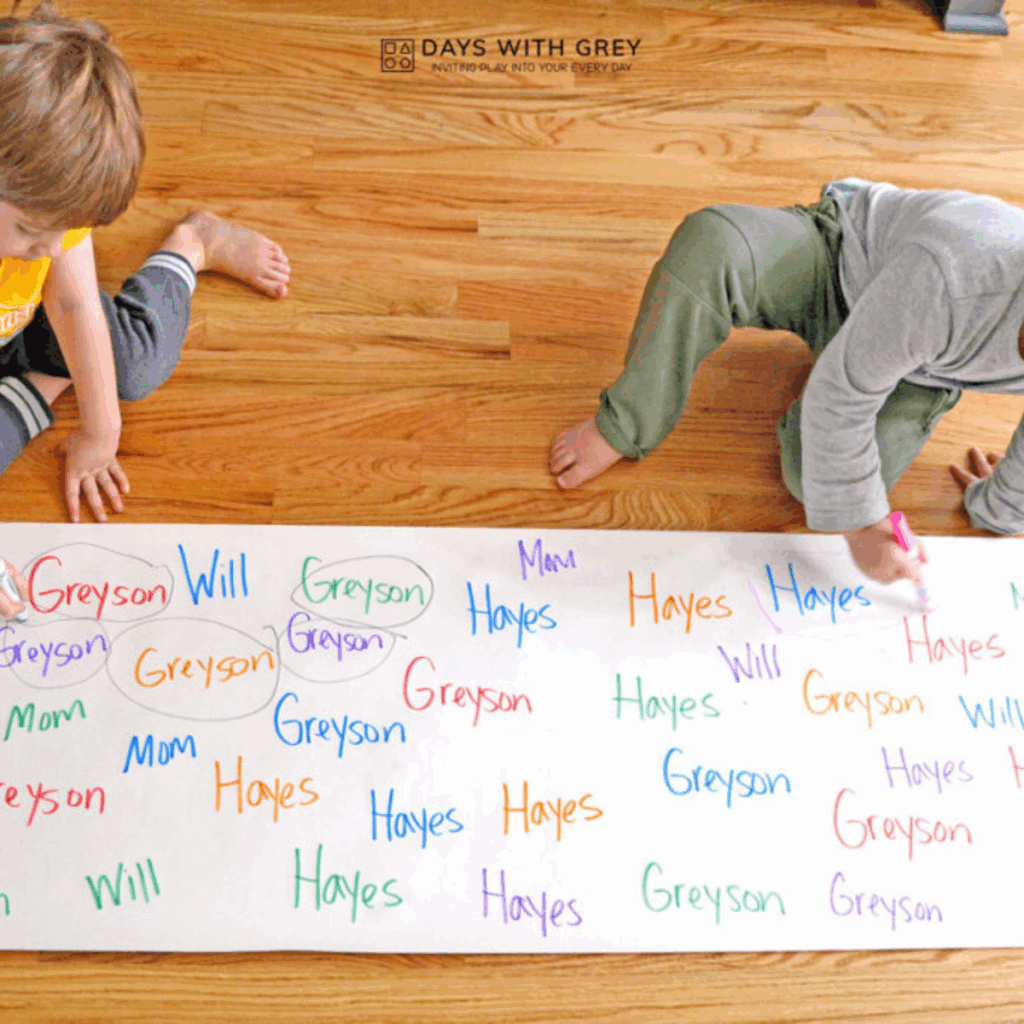
Find Your Name
Write the names of family members throughout the paper. Next, invite your child to see their name on the giant poster and circle it. This is an excellent way to prepare young children for writing and help them develop a steady hand as they circle each name. Forming circles is excellent practice for future letter formation.
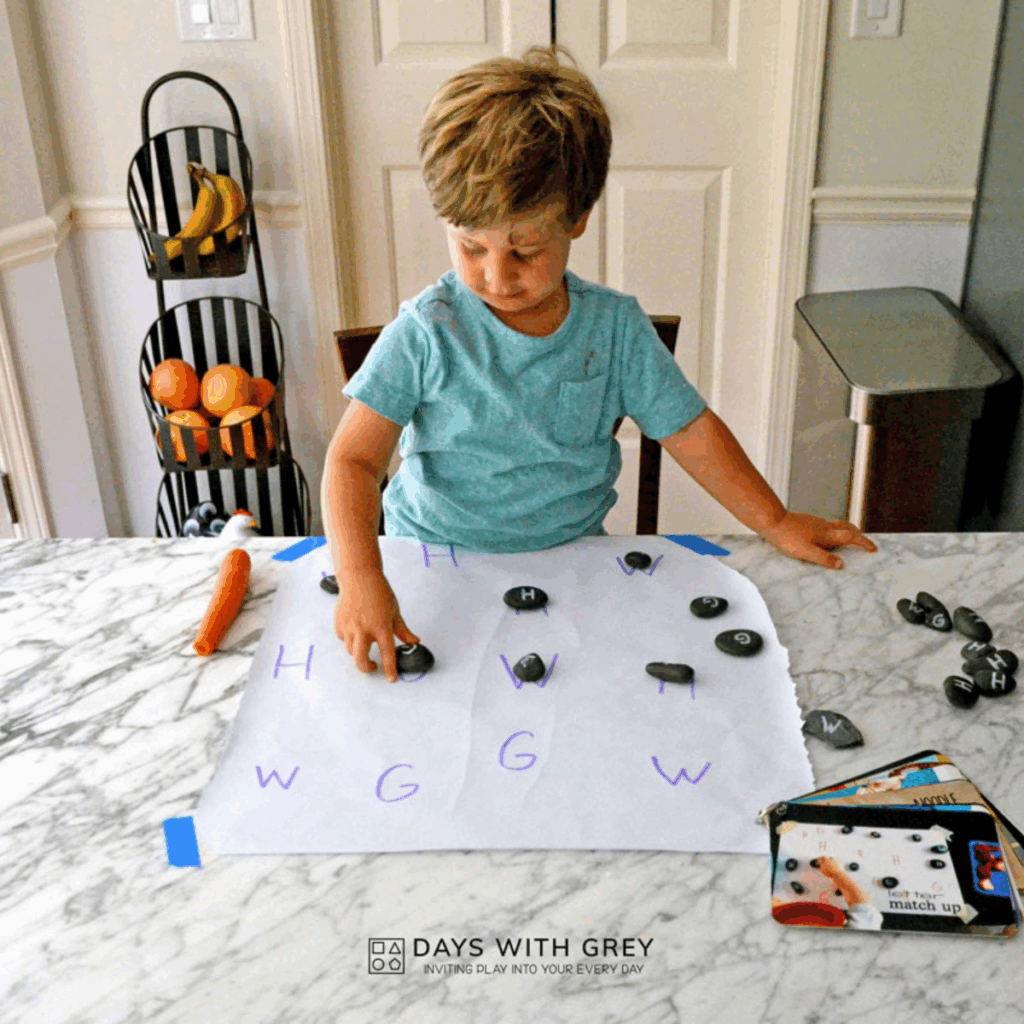
Rock Letter Match-Up
Gather some black rocks from the dollar store and write a few letters on each one with a white permanent marker. This is a hands-on way to practice a few letters at a time and improve letter recognition.
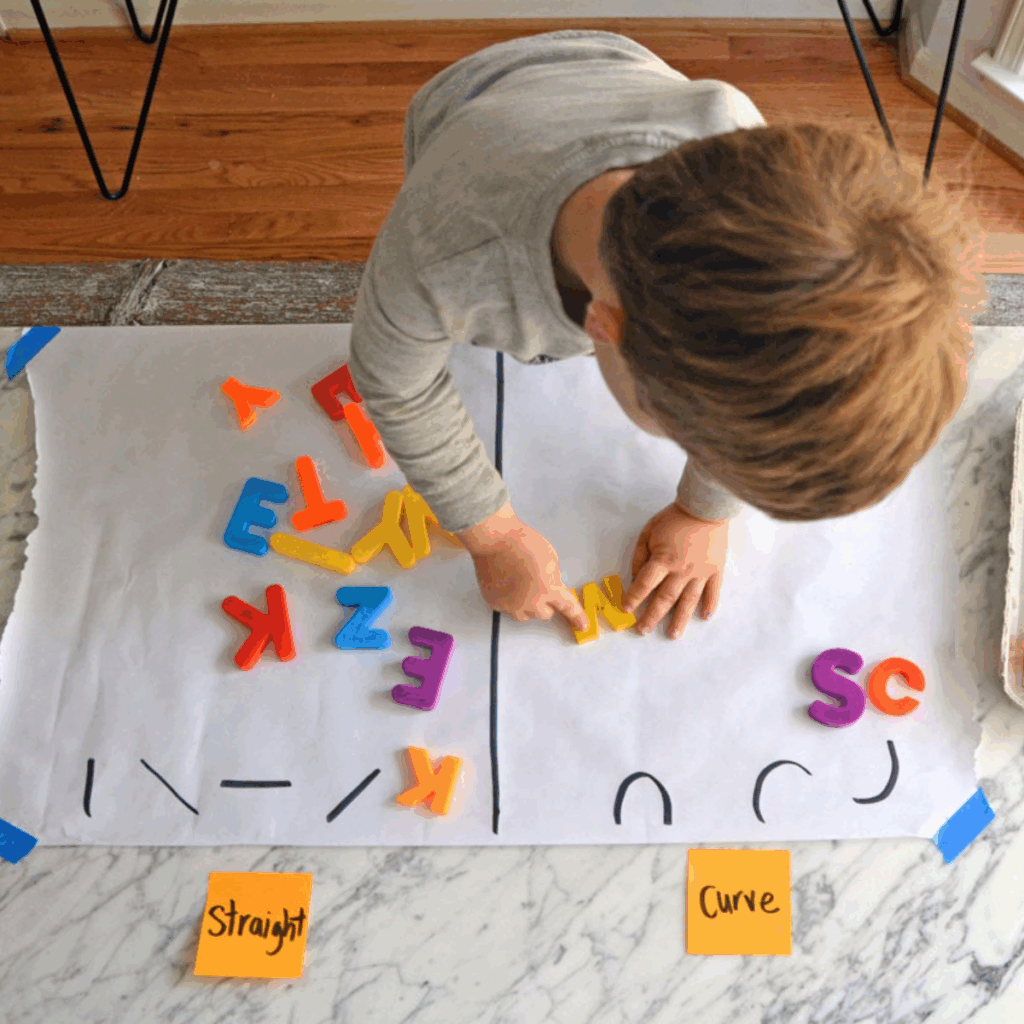
Sort the Alphabet
Did you know that letters have curves, straights, slants, tunnels, and dots? I didn’t either until it was pointed out to me. Seeing and recognizing this is the first step to writing the letters. Let’s build a strong foundation, learning how a letter looks before putting the pencil in a child’s hand and asking them to write their name.
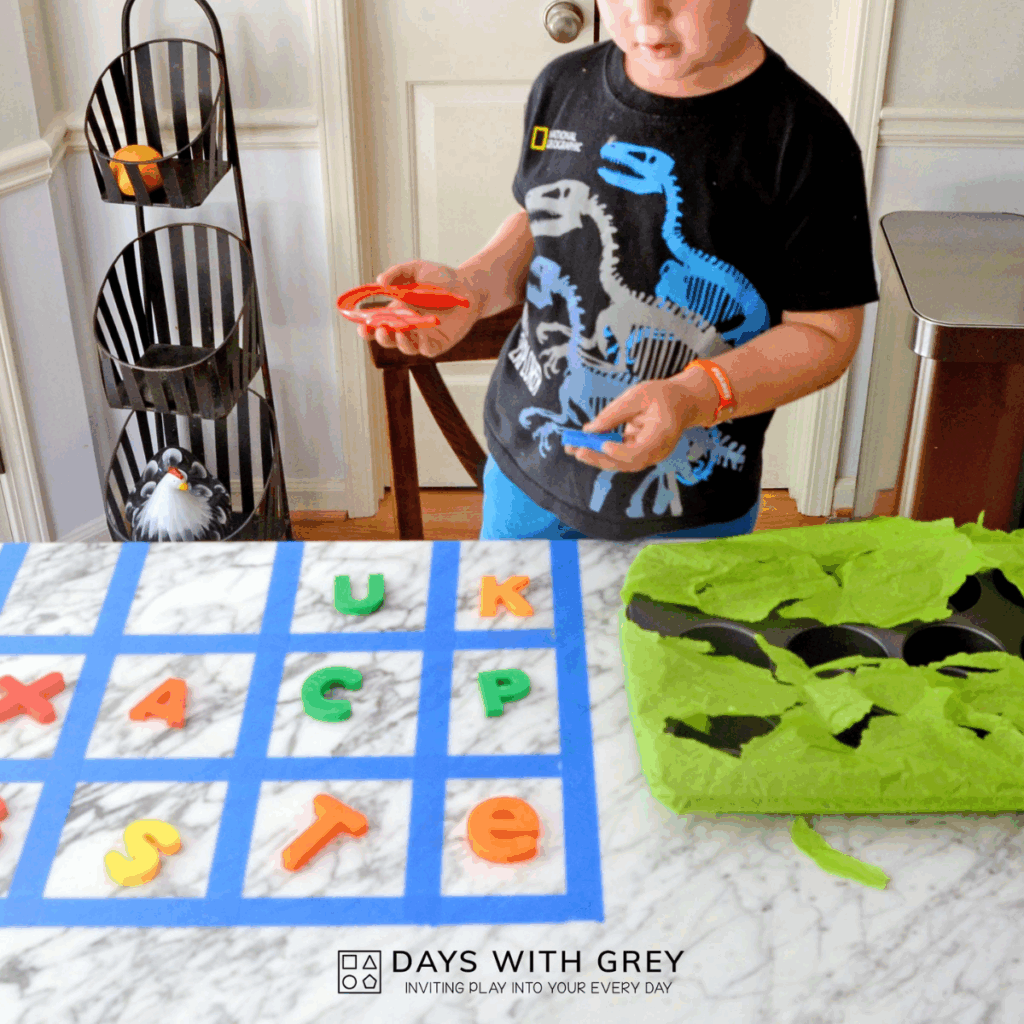
Alphabet Grab
Grab your muffin tin! This alphabet surprise game is a hoot. Put letters in the muffin tin and cover with tissue paper. Young learners play by poking through the tissue paper and recalling the letter name pulled. As you practice letter sounds, share simple words that have the same beginning sound.
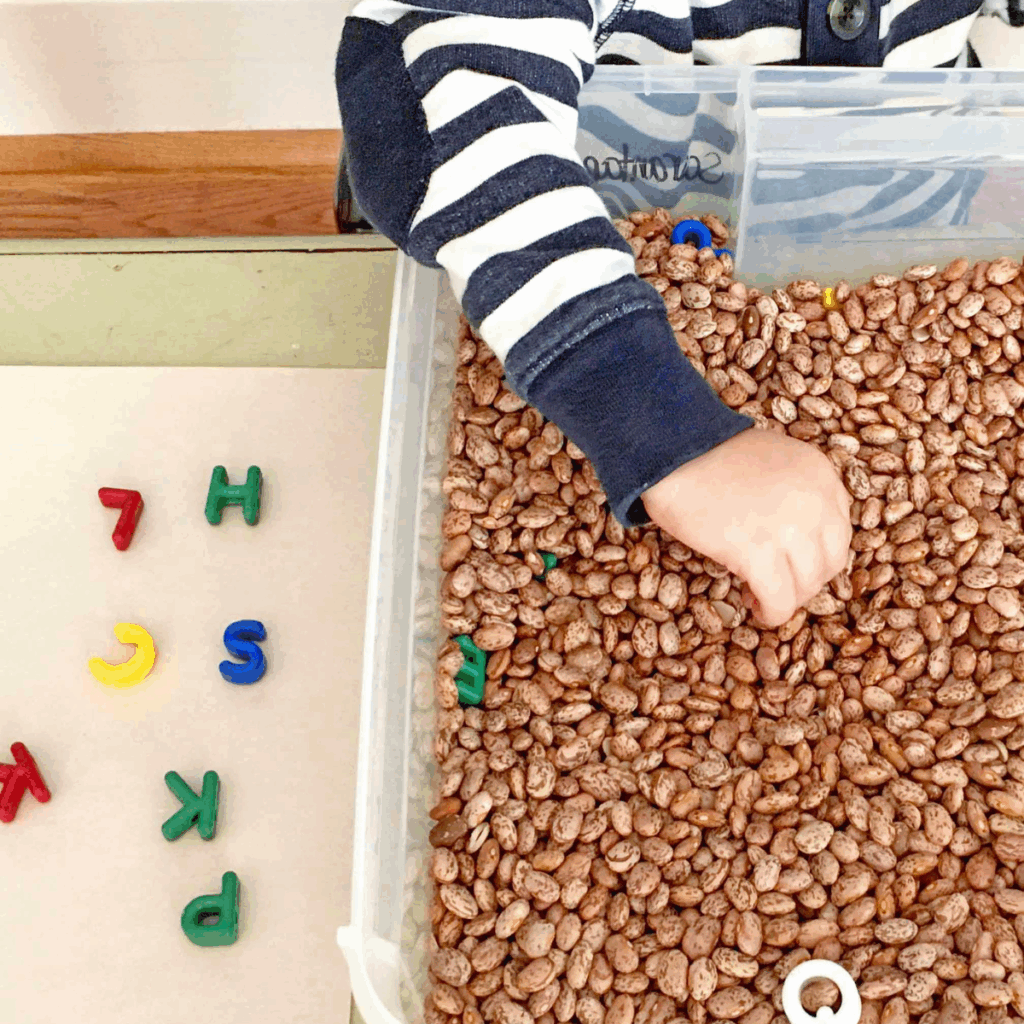
ABC Bean Sensory Bin
Beans are a hit for sensory play. Bury a few plastic lacing letters and invite your child to dig in. Grasping these small letters will help with fine motor development and stimulate the senses, promoting further learning and development. Alphabet activities are so much fun when they are tactile!
RELATED: Does your child enjoy sensory play? Check out these 40 sensory bins for kids.
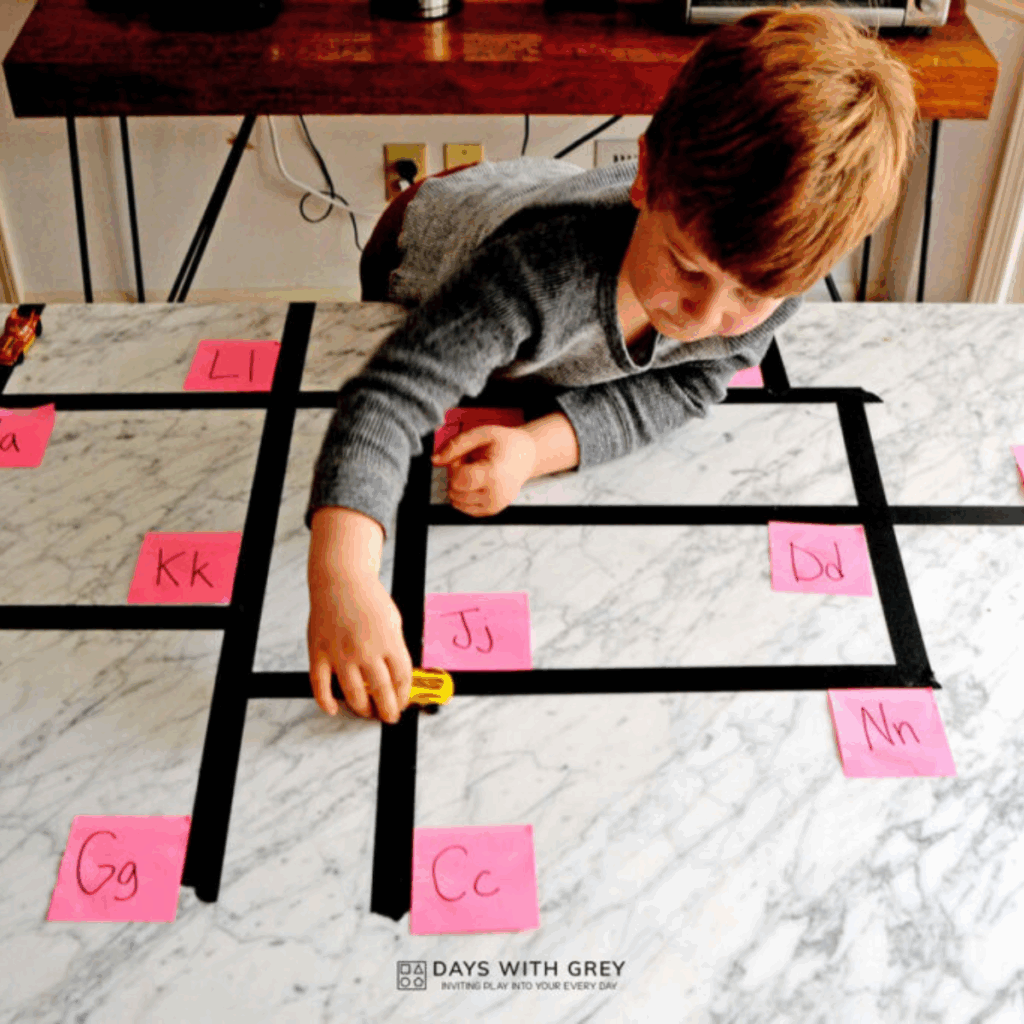
Drive into Letters
Teaching letter recognition through play is the best way. Here, your child drives each car to the correct parking spot as you call out letters for this letter and sound recognition activity. If your child is new to learning letters, use fewer. We can add on more letters as your child develops.
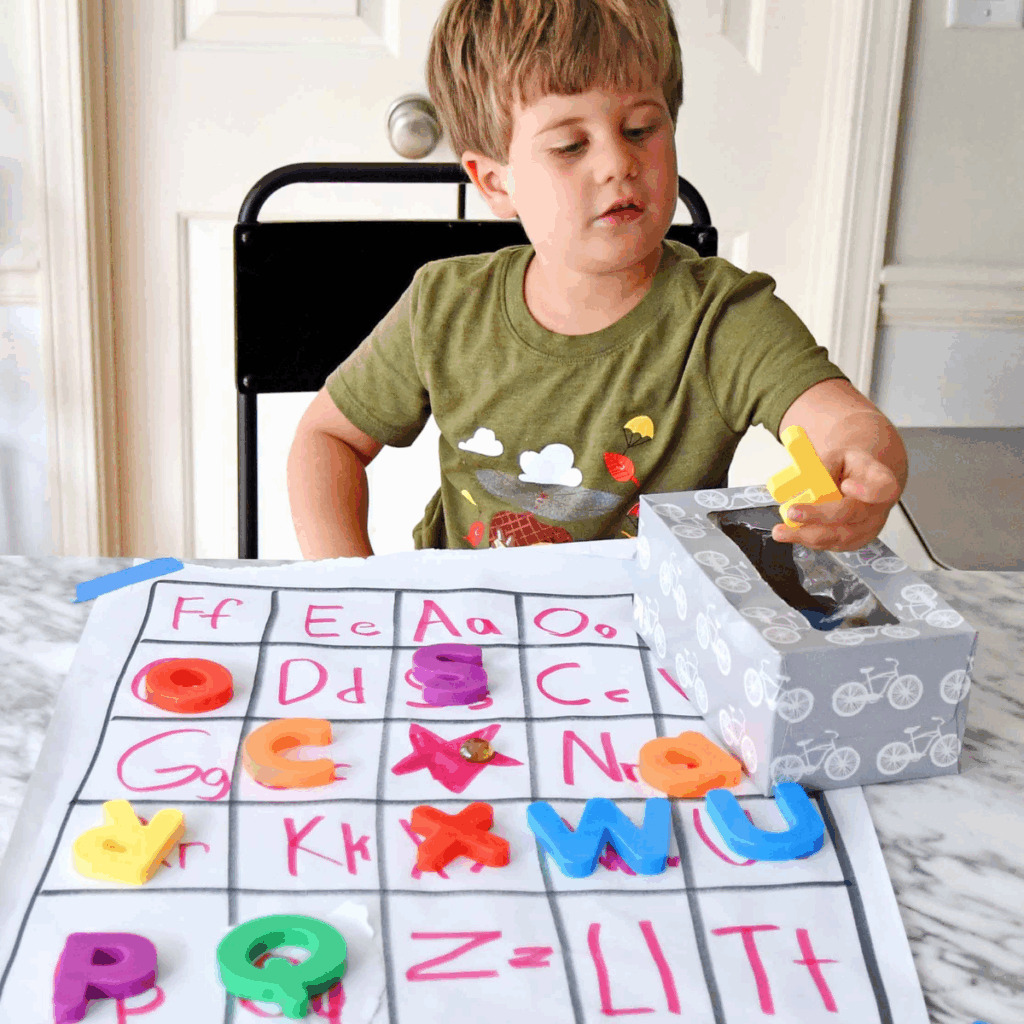
Alphabet Bingo (With a twist!)
Remember bingo? Here is how your child can play solo. Grab some uppercase and lowercase letters and place them in a tissue box. Write the letters you picked on the paper. Invite your child to dig in the box and try to get five in a row to win. This makes a fantastic morning activity, we like to call Breakfast Invitations.
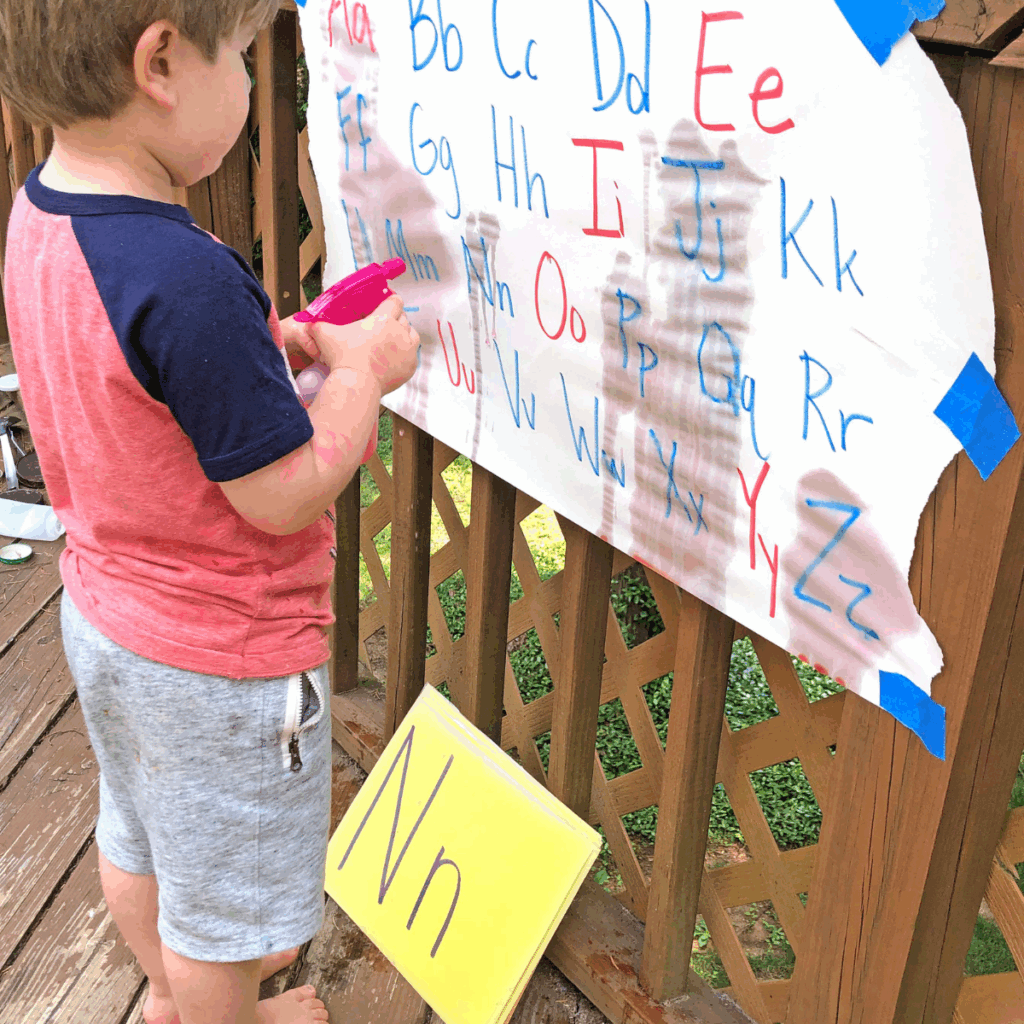
Splash the Alphabet
When the weather warms up, head outside to splash the alphabet. For this idea, I like to take a back seat with a large seltzer and show my child a letter card. (Letter flash cards work well too!) We discuss the letter name and the letter sound; then, he splashes it with colored water. This is a BIG hit!
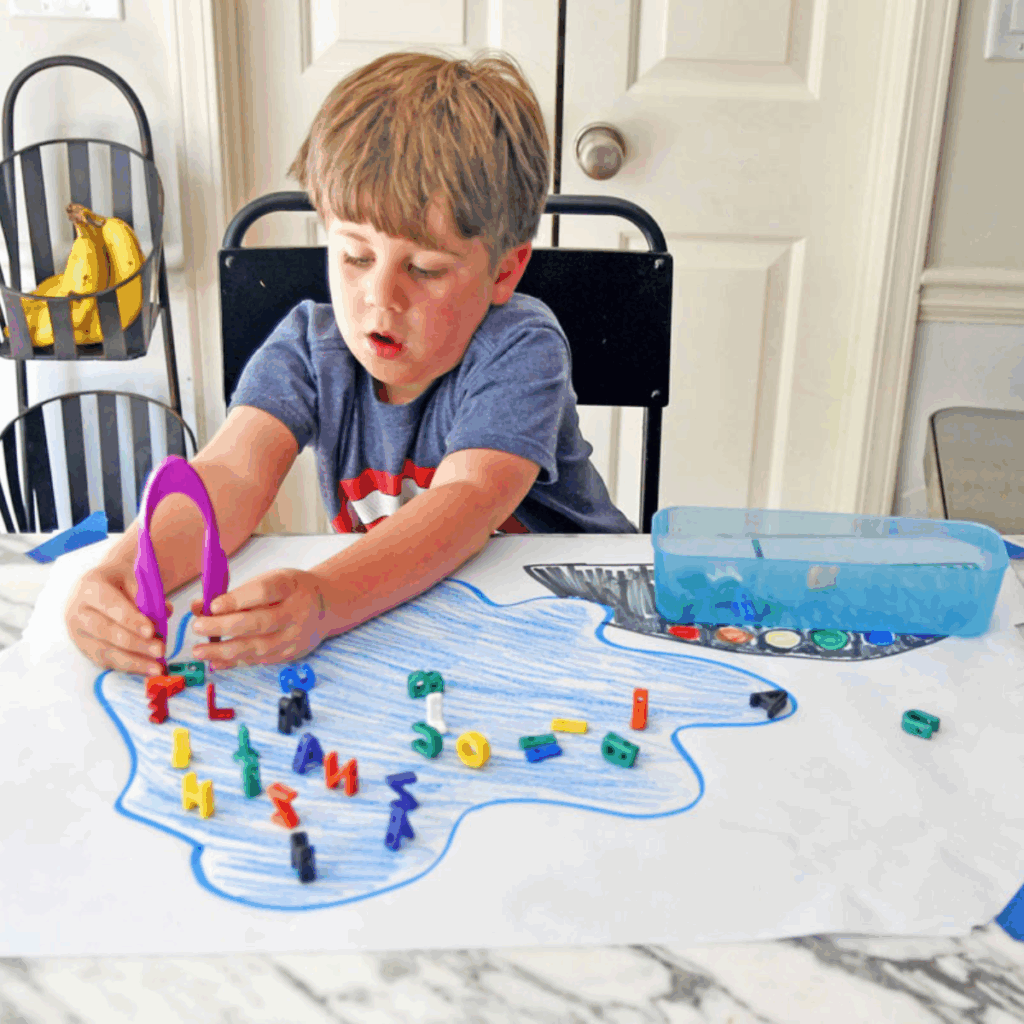
Fine Motor Letter Grab
Here, your child will fish the letters out from the pond and color-sort them when finished. (It is like a letter scavenger hunt!) As I sip my hot tea, I’ll call out a letter name or letter sound to find. Skills practiced are fine motor development, hand-eye coordination, letter recognition, and color sorting. Phew! Can you believe all that in ONE idea? Five stars.
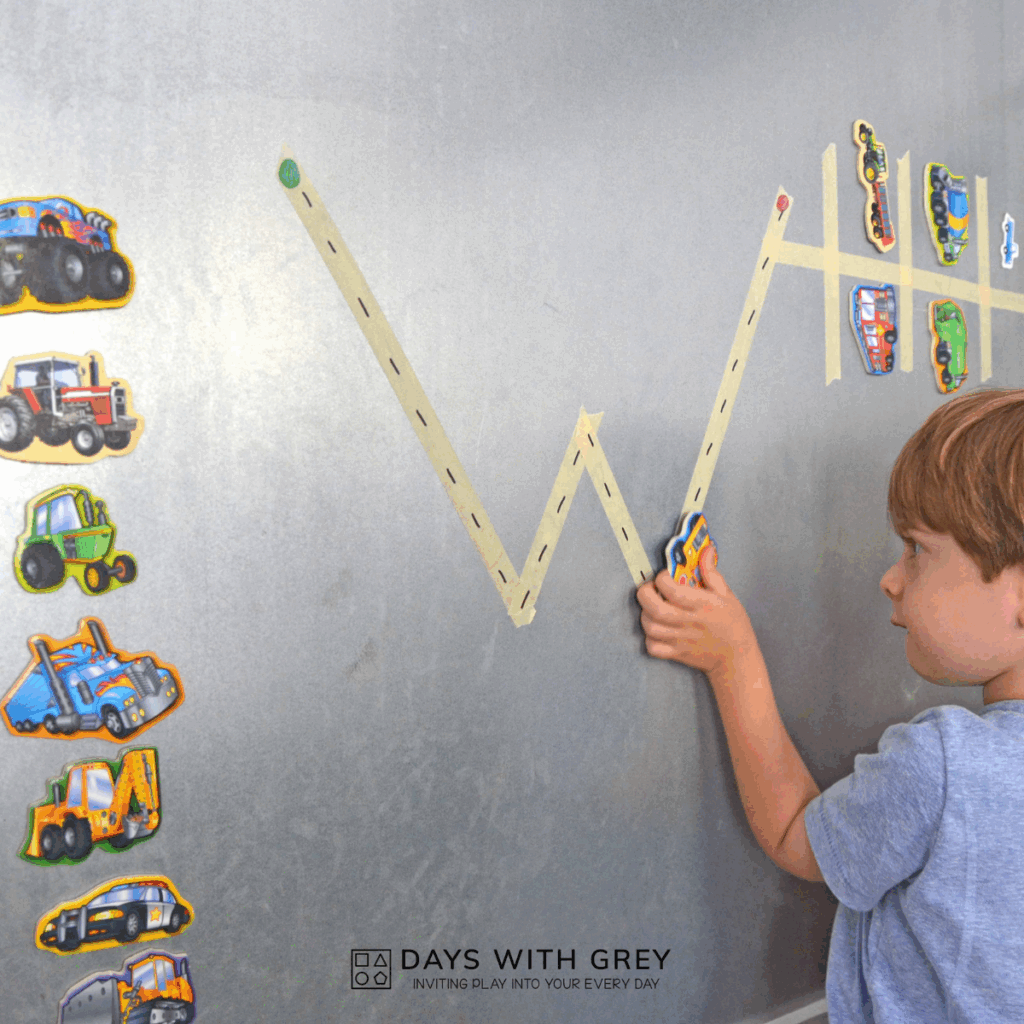
Magnetic Letter Trace
We made this magnetic board years ago, but never underestimate the power of a cookie sheet! Make a large letter using tape and have your toddler or preschooler follow the lines with transportation magnets or race cars. This letter activity is a fun prewriting activity to practice the lines and curves of letters and to recognize letter shapes.
This also makes the perfect alphabet literacy center in a preschool classroom.
Why is Letter Recognition Important?
By Kindergarten, children learning under the Common Core will be asked to recognize and remember the lowercase letters of the alphabet.
Let’s remember that we have plenty of time to build solid foundations of what letters look like, what they are called, and what sound they make.
In preschool, we want to respect this time and introduce letters with lots of room for learning through play and exploration. Exploring the letter names, what a letter looks like, letter sounds, and letter relationships takes time to develop!
RELATED: 101 preschool activities to use throughout the year!

Typical Stages of Letter Recognition:
- Letter Names: Understands letters have names.
- Identify 10 Letters: Can identify ten letters, including their name. This is when they also begin to recognize their name in print.
- Case Differences: Begins to identify lowercase and uppercase letters.
- Letter Sounds: Develops a more in-depth understanding that letters stand for sounds.
- Mastery: Mastered all letter sounds and can identify letter names.
RELATED: Alphabet toys are a great addition to toysthat toddlers and preschoolers use daily!

How to Teach Letter Recognition:
- Start with the letters in your child’s name: These letters will have meaning, and your child will be invested in wanting to remember them. Begin with these 15+ Name Activities.
- Show how the letter is formed: Is it a straight line? Curve? Do you recognize a point in your letter?
- Play with alphabet puzzles.
- Color an alphabet coloring page.
- Read ABC books: Here is an excellent list of alphabet books from Happily Ever Elephants.
- Use a poster: Write your child’s name on a poster and hang it in their room. Decorate posters with the letters of the alphabet. Hang them at eye level.
- Magnetic Letter Play: Engage in magnetic letter play to encourage creativity and build comfort with letter recognition.
- Songs: Sing songs about the alphabet or a single letter at a time.
- Sound and picture: Match letter sounds with pictures.
- Play games: Letter cards are great for recognition learning (and fun!)
- Make ABC books: Have your child stamp, and you write the words.
- Relate letters to people they know and love: Share and begin to recognize the names of family and friends.
- Sound it out: Talk about how the letter sounds. H, hat, /h/.
- Write it out: After much practice with fine motor skills, begin to write the letters.

Summary
Let’s be real. Parents today are overwhelmed, and screens have become a go-to for good reason. After a long day, it’s hard to find the energy for anything extra. But what if bringing back hands-on learning felt just as easy? This post shares low-prep, playful letter recognition activities that make learning feel doable again: no guilt, no pressure, just simple ways to connect and learn through play.
More Letter Activities
Frequently Asked Questions
Begin teaching your child letters by using the letters in their name. These letters are familiar to children, which makes them more invested in learning. Children who feel connected to learning are more likely to take risks. Use these 15-name activities to get started.
We can take a step back when a child struggles to memorize letter names. Begin talking about the letters you notice in your environment and invite your child to play with the letters in their name. Take learning letters slowly to honor your child’s pace. Meet your child at the stage they are by identifying a few letters at a time. Add more letters as your child develops.
When children show reading readiness, we want to model what our mouths look like when saying the letter sounds. Begin talking about how our voice box vibrates (or doesn’t) when making the letter sounds. Bringing attention to these details will help your child decode words as reading becomes increasingly complex over time.


There are so many different ways to teach our children how to learn their letters and numbers. Some wonderful ideas here.
Love all these ideas! My son is a little young for this still but I can’t wait to start with him soon!
That is a great idea and simple items around the house!
These activities look like so much fun!
You have so many fabulous ideas of things to do with preschoolers and even older children. We have been working on letter recognition with our toddler. I think these new games will be a hit!
That is great, Amanda! Tag us @dayswithgrey if you post any!
So fun! I’ll have to try some of these with my little guy.
What fun activities! I remember doing this with my boys.
I Love all of these ideas! My preschooler will love doing these activities!
Such a great DIY! I need to do this with my kids!
Belle | http://www.OneAwesomeMomma.com
I love how easy these seem! My kids would LOVE the sensory bin idea.
These are awesome! I especially like the alphabet trays with ice! Where do you get those trays from?
I love these activities! These sound like so much fun. I love having fun learning activities available for my daughter.
Oh great ideas!!! I love the noodle letters, I think my son would have fun with that… with a lot of these really. 🙂
This is a great list! In theory, I think my son would love the maze and beans exercises. Thank you!
So many great ideas in this list! My daughter loves sticky notes so I am definitely going to try that with her!